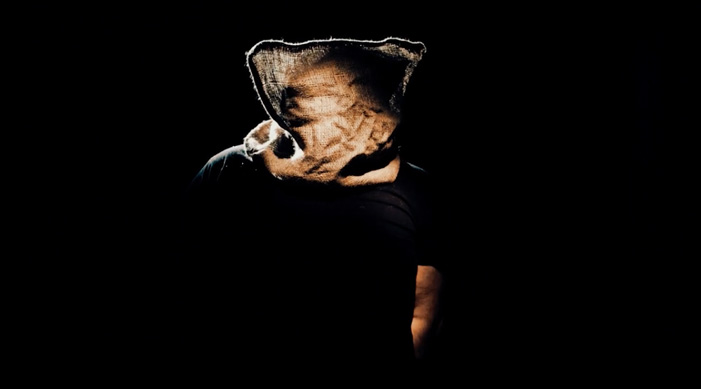
Title: Where the Devil Says Goodnight
Runtime: 6 min
Country: UK
Director: David Short
Placement: Award of Merit
Competition: September 30, 2016
Synopsis: Declan is forced to endure his worst nightmare while being held captive by a mysterious man. Is it life imitating art, or art imitating life?
DIRECTOR Q&A
OR: What was the inspiration for your film?
DS: I’ve always been fascinated with horrific scenes that heavily use implication, how the audience’s imagination can have a much more powerful impact than any visual. Inspired by scenes such as the ear cutting in Reservoir Dogs – I wanted to use this effect against a character in the film, as well as the audience.
OR: When did you conceive the idea for your film and how long did it take before it was realized?
DS: I conceived the idea October 2015. A few friends and I entered into a 72hour film competition and we all pitched ideas, this was my idea – that was fortunately not picked up as there wouldn’t have been enough time to make it. A year later, I came back to the idea, wrote the script and spent the next month pushing to get it made on little to no budget.
OR: What was the most challenging aspect of working in a short film format?
DS: The most challenging part I’ve found people struggle with, as well as myself, is keeping the whole film entertaining. Keeping the audience entranced for the short amount of time it lasts. Too often, young filmmakers, I’m one of the guilty party, like to think of themselves as these all knowing screenwriters, creating art, that every dull moment is necessary for the story, often forgetting that cinema is first and foremost entertainment. Although I do believe, for a perfect piece of film, there needs to be a good balance between entertainment and art.
OR: What was the most challenging aspect of your production?
DS: Low budget filmmaking brings up a lot of challenges. Trying to find that perfect actor, while convincing them to do it for the experience. Trading favours with cinematographers, gaffers, sound operators to create the dream team. When you first start filmmaking as a student, you’re often left to take on every role in the credits, having a very small crew. This is difficult, but exhilarating. It is real hardworking experience, unlike anything you’ve done before. But as you become more established, the roles begin to be filled by other enthusiasts of their trade, and as a director you start to feel a weight being lifted off of your shoulders, so many aspects you do not need to worry about anymore and you’re able to focus on directing. This project was probably the smoothest and most relaxed I’ve ever done because I had that team. my co-director and I were able to focus on our actors a lot more than usual – getting the exact performance we wanted.
OR: Do you have any advice for first-time filmmakers?
DS: Planning is everything. If you do not plan, rehearse, have shooting scripts, storyboards, etc – you’ll only make the process more difficult for yourself. Production might be the most exciting part about filmmaking, but the pre-production process is just as important. It’s like studying before a big exam. The more prepared you are, the smoother the production will flow. I learnt this the hard way in my student years. I always thought I’d be fine just winging it on the day, but something always fell through – everything became rushed and lacked attention to detail – this is bad filmmaking.